

What Is Sound Masking? How It Protects Speech Privacy in Offices
Sound masking adds a soft, steady background sound to a space. It makes nearby speech harder to understand, so conversations stay private, and people stay focused.
How Does Sound Masking Work?
Sound masking does not block noise. It covers it.
Small speakers spread through the ceiling play a low, even sound. That sound blends with the voices around it. Speech fades into the background, and distant talkers become hard to follow.
It Adds Sound, Not Silence
Most offices are not too loud. They are too quiet in the wrong ways. When the background is very quiet, one voice can carry a long way.
Key takeaway: A steady background sound lowers how well people can understand speech from far away.
How Is It Different From White Noise?
Sound masking is not the same as a basic white noise machine. A professional system is tuned to the range of human speech. That helps it hide voices without sounding harsh.
- Sound masking: Tuned and calibrated for the room. Built into the ceiling. Covers the whole space evenly.
- White noise machine: A single device. Covers a small area. Is not tuned to the room.
Why Do Offices Need Sound Masking?
Speech is one of the biggest distractions at work. It is also a privacy risk when people talk about sensitive topics.
Open Offices
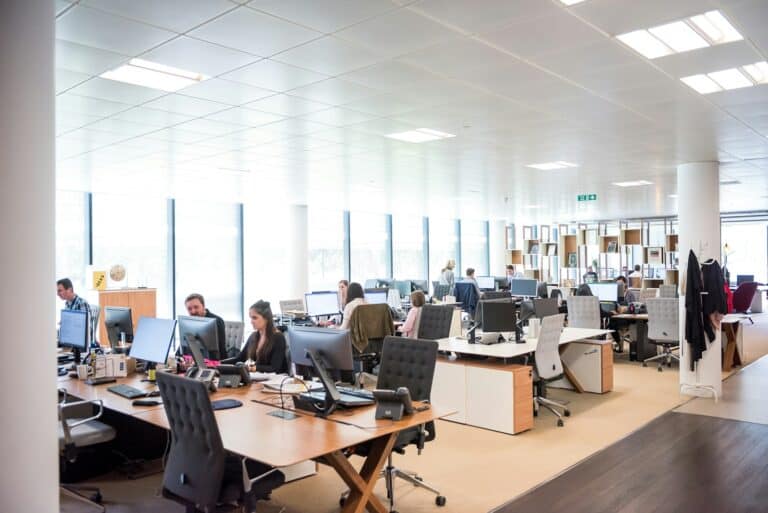
In open layouts, voices travel. Sound masking helps reduce that distraction. It also makes phone calls and meetings harder to overhear.
Private Offices and Meeting Rooms
Walls do not always stop speech. Gaps, doors, and shared ceilings let voices leak through. Masking helps protect confidential conversations in executive suites, HR offices, and conference rooms.
Call Centers
Call centers have many people talking at once. A well-tuned system can lower the noise that spills from one desk to the next.
MasterLink installs sound masking in settings that range from single-room privacy to building-wide systems for offices and call centers.
Does Sound Masking Help With HIPAA?
It can help, but it does not make a clinic “HIPAA compliant” on its own.
The U.S. Department of Health and Human Services says the HIPAA Privacy Rule allows some incidental disclosures. This applies when a provider uses reasonable safeguards. You can read the guidance on HHS.gov.
Sound masking is one safeguard a medical office can use. It makes it harder to overhear talk at:
- Front desks and waiting rooms
- Consultation areas
- Nursing stations
- Administrative offices
MasterLink offers sound masking and secure access control for medical centers, clinics, and healthcare complexes to support HIPAA compliance.
What Makes a Good Sound Masking System?
Good results come from good design. A system that is too loud is annoying. One that is too quiet does not work.
Look for these features:
- Custom acoustic analysis of your space
- Strategic speaker placement in the ceiling
- Careful calibration after installation
- Zone-based control for different areas
- Automatic sound level ramping
- Ongoing support and adjustments
Why Zones Matter
A private office and an open floor have different needs. Zone control lets each area have its own level. That keeps the sound comfortable and effective.
Why Calibration Matters
Calibration tunes the system to your room. Ceiling height, furniture, and layout all change how sound travels. Tuning after installation helps the system do its job without drawing attention.
What Happens During a Sound Masking Project?
Every building is different. MasterLink builds each system around your facility and your needs.
- Site evaluation: The team studies your space and your privacy goals.
- Custom system design: They plan the layout and zones.
- Professional installation: Technicians install and calibrate the system.
- Training and support: Your team learns how to use it.
- Maintenance options: You can keep the system tuned over time.
You can also ask for a sound testing demonstration. MasterLink offers a demo of its sound masking system for your office.
Why Choose MasterLink Communications for Sound Masking in Arizona?
MasterLink is based in Tempe, Arizona. Steve Thompson founded the company in 1993. Today, it serves Arizona businesses, schools, and government facilities.
Its work spans:
- Healthcare facilities
- Educational campuses
- Corporate offices, including multi-tenant buildings and executive suites
- Government and military sites
MasterLink also installs physical security systems and voice and data cabling. You can work with one team for many building technology needs.
Ready to see how quiet your office could feel? Contact MasterLink for a free consultation.
Frequently Asked Questions
What is sound masking in simple terms?
Sound masking is a low, steady background sound played through ceiling speakers. It blends with speech so voices are harder to understand. This protects privacy and cuts distractions.
Is sound masking the same as white noise?
No. Professional sound masking is tuned to the room and to the range of human speech. It is spread evenly through the space by a built-in system. A white noise machine is a single device that covers a small area.